
For lending institutions, the first thing they check before approving a loan is the financial statements. It helps in evaluating a borrower's creditworthiness. These are reliable documents. But these statement are also have some issues, which means lenders can’t rely on them.
What are Financial Statements?
It is a report that summarises how business financial activities, performance, and position are over a specific period. It is typically used by investors, creditors, and management to evaluate economic health.
Limitations of Financial Statements
These are limitations of financial statements:
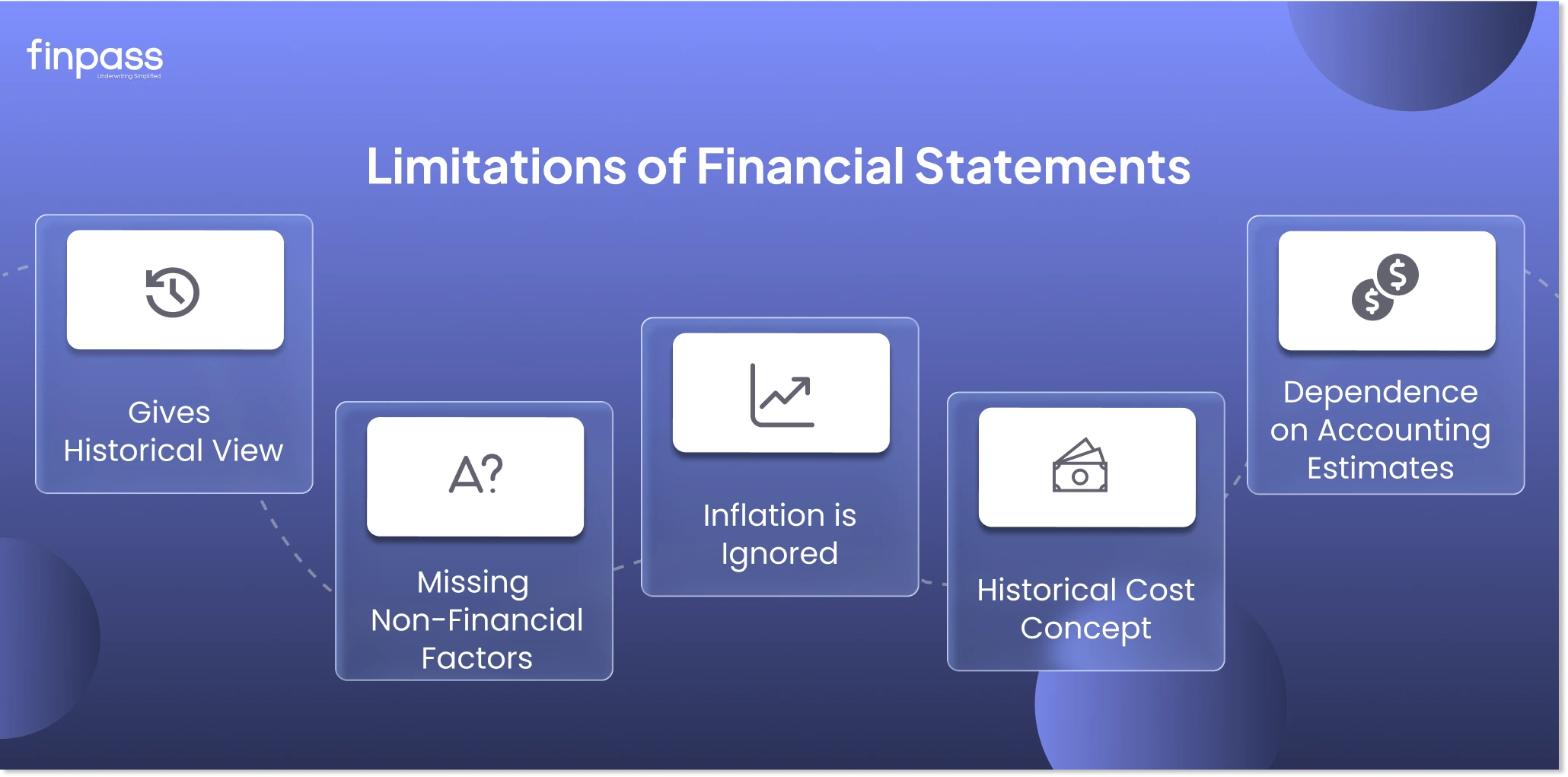
Gives Historical View
It provides records of the borrower’s financial performance. It can be useful in checking the track record. It provides the previous accounting period rather than current or future stats. A few factors can change any type of market condition, including customer demand, competition, and economic factors.
Missing Non-Financial Factors
It mainly focuses on numerical information such as revenue, expenses, assets, and profits. It ignores employee satisfaction, brand reputation, customer loyalty, innovation, and ESG performance. These things are not part of the financial statements; however, they contribute to the long-term growth of the company.
Dependence on Accounting Estimates
It relies on the accounting estimates, which means some figures are based on assumptions rather than exact values. Businesses use estimates for depreciation, inventory valuation, and bad debt positions. Different depreciation methods can produce different profit figures even when the same asset is used.
Historical Cost Concept
The historical cost concept focuses on the assets being recorded in financial statements at their original purchase price. If the value of an asset increases or decreases over time. The financial statements usually continue to show the old purchase cost. For example, a land purchase for rupees 10 lakh many years ago may now be worth ₹2 crore.
Inflation is Ignored
It is usually prepared based on historical costs, it means they record assets and expenses at the original purchase prices rather than their current market values. With inflation, the purchasing power of money decreases. Asset values can appear lower than the actual worth, and profits may be overrated because replacement costs and operating expenses rise over time.
Window Dressing and Manipulation
Window dressing and manipulation refer to accounting practices where companies show fake financial statements instead of actual ones. Businesses can use earnings manipulation techniques such as delaying expenses, reducing short-term liabilities, and accelerating revenue growth before reporting dates.
Difficulty in Comparing Companies
Different companies follow different accounting policies, industry practices, and reporting standards. It makes it difficult to compare different companies in the same industry. Companies can use different depreciation methods, inventory valuation techniques, or revenue recognition policies. It can affect profits, assets, values, and financial ratios.
Companies operating in different industries have unique cost structures and business models. Global businesses can prepare reports under IFRS (International Financial Reporting Standards) or GAAP (Generally Accepted Accounting Principles), which can create differences in financial reporting and interpretation.
Factor | Comparison Issue |
Depreciation Method | Different methods can increase or reduce reported profits |
Inventory Method | FIFO, LIFO, or weighted average methods create different inventory valuations |
Revenue Recognition | The timing of revenue recording may vary |
IFRS vs GAAP | Different accounting standards affect financial presentation |
Industry | Different industries follow different financial structure benchmarks |
Why is understanding financial statements important?
Here is how businesses can overcome these limitations;
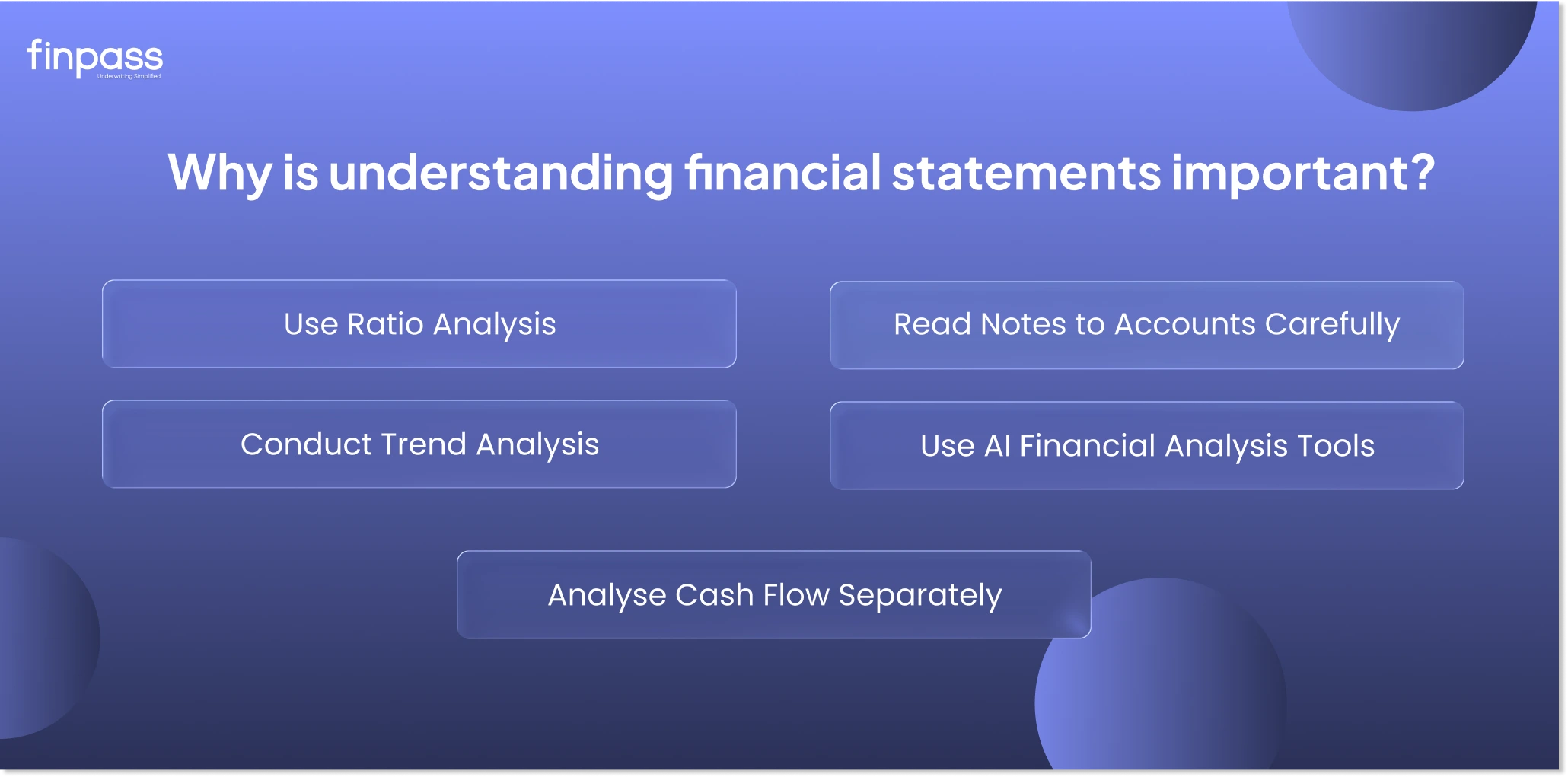
- Use Ratio Analysis: Financial ratios help evaluate profitability, liquidity, efficiency, and solvency. It provides insights beyond basic financial statement numbers.
- Conduct Trend Analysis: Comparing financial performance over multiple years helps identify growth patterns, risks, and long-term business stability.
- Analyse Cash Flow Separately: A company can show profits but still face cash shortages. It is essential to review cash flow statements to evaluate actual liquidity and operational strength.
- Read Notes to Accounts Carefully: Account notes are important to read because they tell about accounting policies, liabilities, risks, and estimates.
- Use AI Financial Analysis Tools: Many AI Financial analysis tools help analyze financial statements accurately. AI-based analytics tools to help businesses forecast risks, detect fraud, and predict future financial performance more accurately.
- Conduct Regular Audits and Internal Controls: Auditing and internal controls enhance financial transparency and reduce the chance of errors or manipulation.
Conclusion
Financial statements are essential tools for evaluating a borrower’s financial health, profitability, and repayment capacity. It helps lenders, investors, and businesses make informed financial decisions. These statements have several limitations, such as their historical nature, dependence on accounting estimates, and exclusion of non-financial factors.
FAQs
Ques: What are the limitations of a financial statement analysis?
Ans: Historical nature, qualitative factors ignored, inflationary effects, and accounting policy variation are limitations of financial statement analysis.
Ques: Why are financial statements called historical documents?
Ans: Because it gives past financial performance and transactions.
Ques: What are the four limitations of financial accounting?
Ans: The four limitations of financial accounting are historical nature, exclusion of non-financial factors, failure to reflect current market value, and vulnerability to manipulation.
Ques: Why is comparing two companies difficult?
Ans: Two different companies use different accounting methods and reporting policies.
Ques: Why should lenders not rely only on financial statements?
Ans: Because it does not show current risks, cash flow problems, or non-financial business issues.