.webp)
Loan defaults and financial fraud are increasing in the banking and fintech industry. Credit Risk Management helps banks and lenders identify risky borrowers, reduce bad debts, and maintain financial stability. Here in this blog, you will learn about risk management in detail.
What is Credit Risk Management?
It is a process of identifying, assessing, monitoring, and reducing the risk from a borrower’s loan defaults. Right credit decisions allow for maintaining asset quality, liquidity, and financial stability.
It reduces NPAs, enhances profitability, and strengthens investor and depositor confidence. Its main goal is to reduce the loss.
Why is Credit Risk Management important?
It is important for each financial institution, bank, and lending firm because:
- Reduces Financial Losses: It helps organizations identify risky borrowers before approving loans or credit. It reduces the chance of defaults and bad debts.
- Enhance Decision Making: Credit risk analysis allows lenders to make informed decisions based on a borrower’s repayment capacity, credit history, and financial condition.
- Maintains Financial Stability: It protects the financial health of banks and businesses. It controls non-performing assets (NPAs).
- Improved Credit Portfolio Quality: Continuous monitoring of borrowers helps maintain a healthy portfolio with lower default rates.
What are the Challenges of Credit Risk Management?
These are the challenges that occur in credit risk management:
- Data Quality Issues: Credit decisions depend on customer information, including income, credit history, repayment behaviour, and financial records. Incomplete, outdated, or incorrect data can lead to poor credit assessments and higher default risk.
- Fraud and Identity Theft: Fake identities, forged documents, and fraudulent loan applications make it difficult for lenders to verify genuine borrowers. It increases credit losses and weakens risk management systems.
- Economic Uncertainty: Inflation, recession, unemployment, and interest rate fluctuations affect a borrower’s repayment capacity. Sudden economic downturns can increase loan defaults.
- Regulatory Compliance: Financial institutions must comply with the changing government regulations, data protection laws, and banking standards.
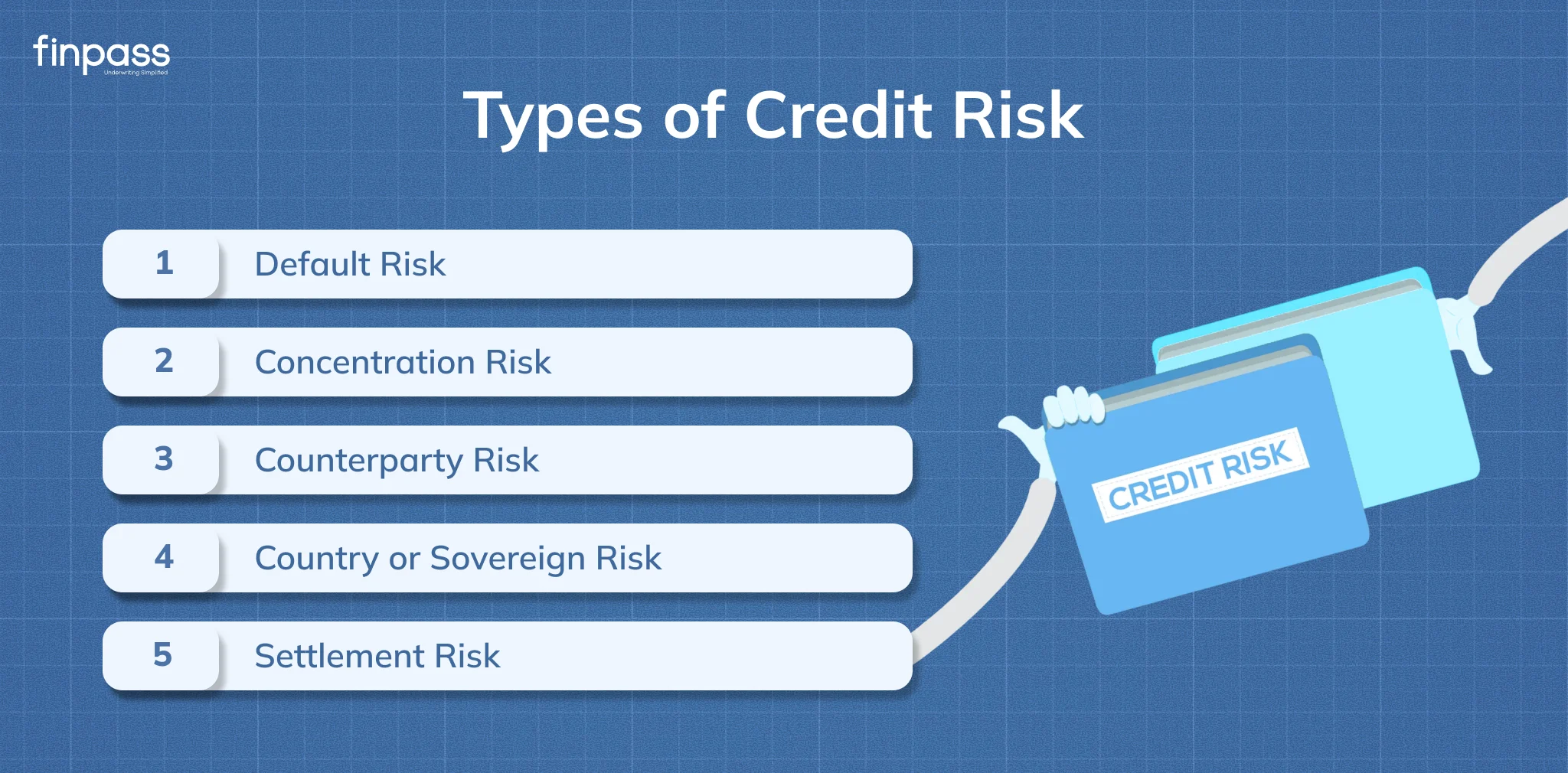
Types of Credit Risk
There are mainly 5 types of risk:
- Default Risk: It happens when a borrower is unable to repay a loan or misses scheduled payments. It is one of the most common credit risks faced by banks and lenders.
- Concentration Risk: These risks occur when a business or financial institution gives too much credit to a single industry, region, or group of customers.
- Counterparty Risk: It is the chance that the other party involved in a financial agreement fails to meet its payment or contractual obligations.
- Country or Sovereign Risk: Country and sovereign risk occur when political instability, economic crises, government actions, or currency issues in a country affect a borrower’s ability to repay debt.
- Settlement Risk: This risk occurs when one party completes a financial transaction. But the other party fails to complete its part of the payment or transfer process.
What are the best practices for Effective Credit Risk Management?
These are the best practices for effective credit risk management:
- Create Clear Lending Rules: It helps you set proper rules for giving loans or credit. It helps businesses approve trustworthy customers and reduce risky lending.
- Monitor Customer Payments Regularly: It helps track customer repayment in real time to detect missed payments or warning signs early.
- Avoid Depending on One Customer Group: Banks and organizations use automated tools to verify customers' information and reduce errors in decision-making.
- Maintain Accurate Customer Information: The lending institution should use advanced AI-based tools to help businesses predict risky borrowers and take right decisions.
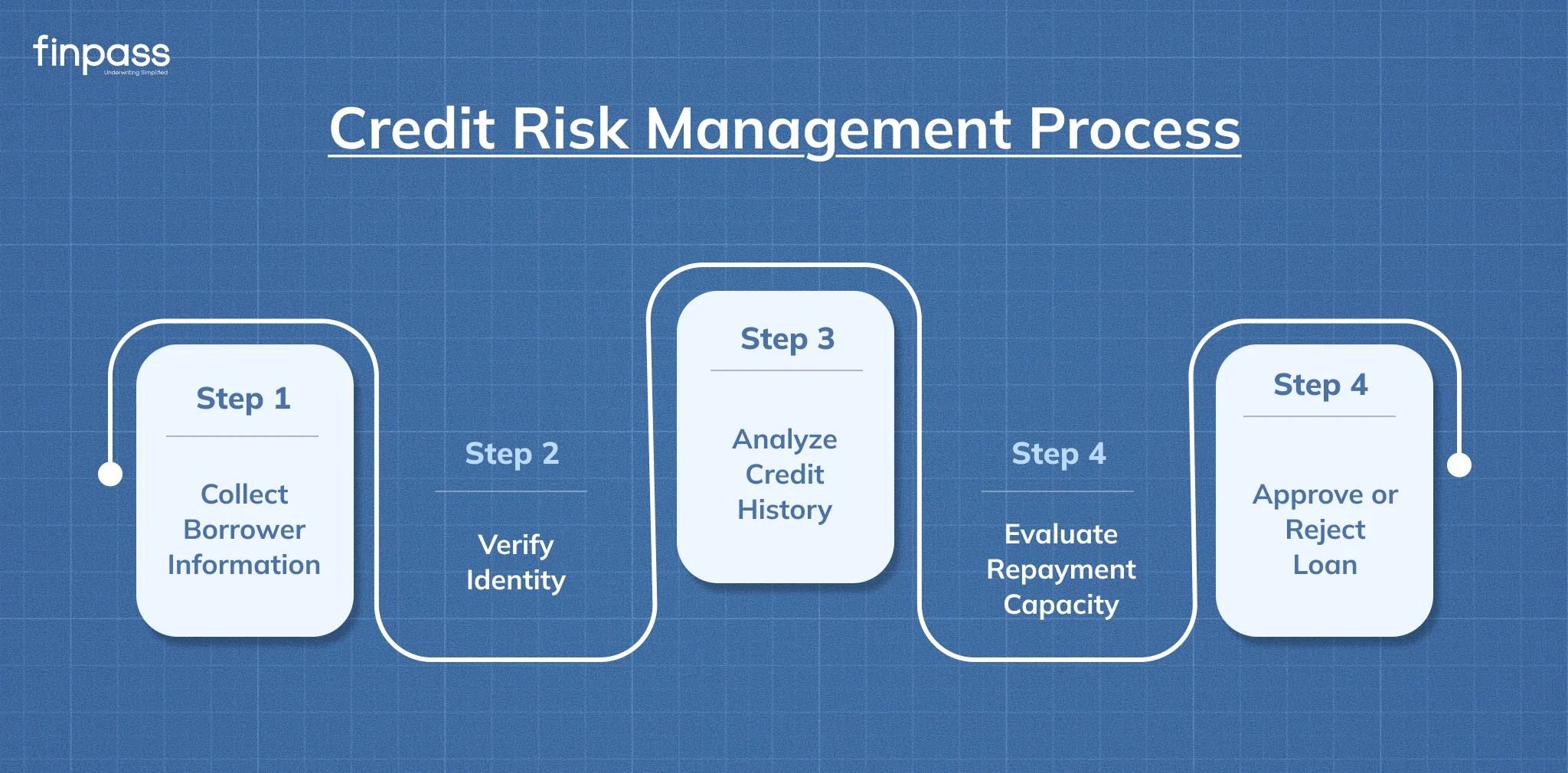
What is the credit risk management process?
It is a full step-by-step process that involves several steps:
- Collect Borrower Information: It is the initial process in which the lender collects borrower information, including basic details, income information, and employment details. It helps you understand the borrower’s financial background.
- Verify Identity: The borrower’s identity and documents are verified to prevent fraud and fake applications. Financial Institutions may verify government-issued ID proof, PAN Card, Aadhaar Card, Address proof, and income documents.
- Analyze Credit History: Lender checks borrower’s credit history and repayment behaviour via credit reports and scores. It helps identify previous loan repayments, missed or delayed repayments, existing debt obligations, and creditworthiness.
- Evaluate Repayment Capacity: The lender checks if the borrower can repay the loan based on monthly income, existing debts, and expenses. It confirms the borrower can handle the loan without financial stress.
- Approve or Reject Loan: After completing the risk assessment, the lender decides whether to approve the loan, reject the application, or modify the loan terms, such as a lower loan amount or a higher interest rate.
Conclusion
For all institutions that lend money, risk management is a must. A well-planned risk management strategy aids in reducing financial loss as well as keeping financial stability at the lending and banking institutions. It analyzes borrower behavior and monitors repayments. It also utilizes advanced technologies such as AI and analytics, which allow firms to make the right lending decisions.
FAQs
Ques: What are the 5 Cs of Credit Risk Management?
Ans: The 5 Cs are character, capacity, capital, collateral, and conditions.
Ques: What are the four types of credit risk?
Ans: The four types of default risk are concentration risk, counterparty risk, and country risk.
Ques: What are the 3 Cs of Credit Risk?
Ans: The 3 Cs are Character, Capacity, and Capital.
Ques: What are the main components of an effective credit risk management strategy?
Ans: The main components are borrower assessment, credit monitoring, risk analysis, fraud detection, and compliance.
Ques: What is the difference between credit risk and default risk?
Ans: Credit risk is the overall risk of non-repayment; on the other hand, default risk means failure to repay a loan.
Ques: Why is customer data important in credit risk management?
Ans: It helps lenders check repayment ability, detect risks, and make accurate lending decisions.